
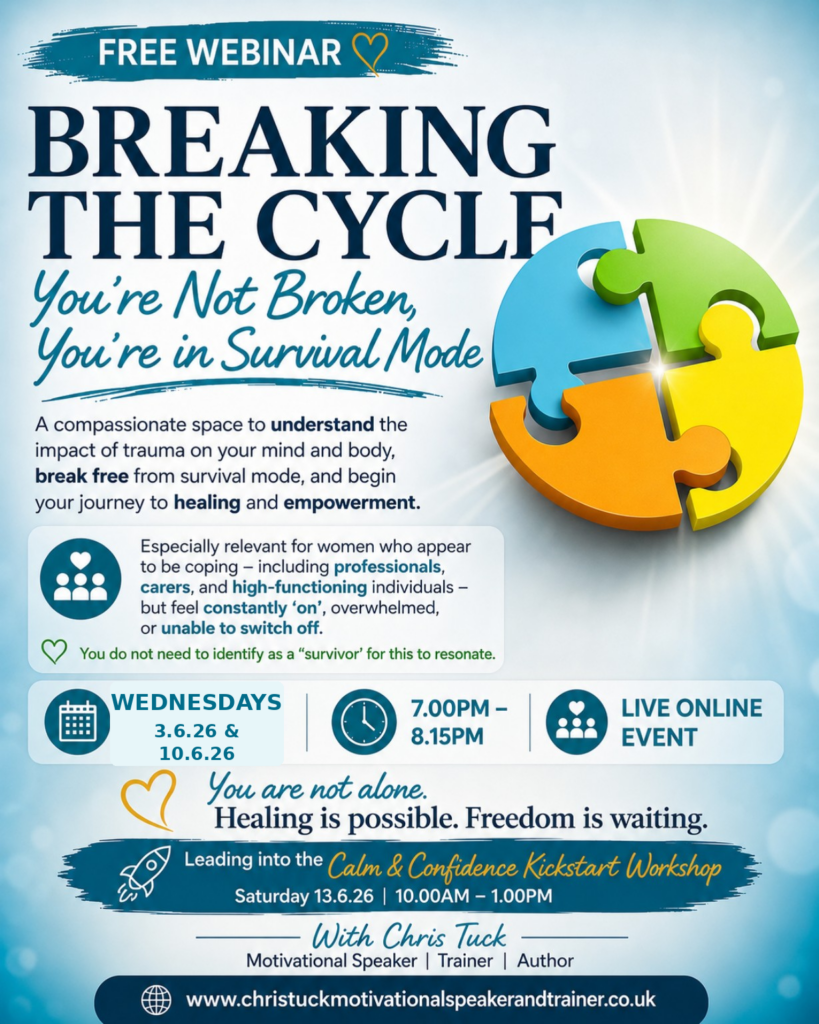
Online Learning Trauma Recovery offers a gentle, accessible way to learn about stress, burnout, survival responses and emotional wellbeing from the comfort of home. Through webinars, workshops and trauma-informed learning, I help people better understand the connection between the mind, body, nervous system and recovery.
For many people, attending an in-person session can feel difficult. Time, travel, confidence, anxiety, caring responsibilities, health, work demands or emotional overwhelm can all become barriers. Therefore, online learning can offer a valuable first step, especially for those who want to listen, reflect and learn at their own pace.
The aim is not to replace therapy, counselling or medical support. Instead, Online Learning Trauma Recovery provides education, language and understanding. It helps people make sense of what may be happening in their body and mind.
Learning From Home
One of the greatest benefits of online learning is that people can access support and education from a space that feels familiar. They can join from home, keep their camera off if needed, take notes, pause afterwards and reflect in their own time.
As a result, learning can feel safer and more manageable.
Walking into a room full of people can feel overwhelming, especially when the subject involves trauma, stress, burnout or emotional wellbeing. By contrast, online sessions can reduce some of those barriers and help people take a first step without feeling exposed.
Sometimes the first step is not talking.
Often, the first step is understanding.
Understanding Stress And Burnout
Burnout is not just about being tired. It can affect energy, motivation, concentration, mood, sleep, relationships, confidence and physical wellbeing.
For people who have experienced trauma, abuse, adversity or long-term stress, burnout may also connect to survival patterns that have been running for years.
Some people keep pushing because stopping feels unsafe. Others shut down, feel frozen, disconnect from themselves or struggle to move forward. Over time, many begin to blame themselves and think they are weak, lazy, broken or not coping well enough.
However, many of these responses make sense when we understand the nervous system.
The body can stay on high alert long after difficult, frightening or overwhelming experiences have passed. When people begin to understand this, shame can start to reduce.
Why Online Learning Trauma Recovery Matters
Online Learning Trauma Recovery matters because it gives people language for experiences they may not fully understand.
Many people know they feel exhausted, anxious, overwhelmed or stuck, but they do not always know why. They may notice poor sleep, muscle tension, emotional eating, people-pleasing, overworking, irritability or feeling unable to switch off.
Without the right understanding, people often turn that confusion inward.
They may ask, “What is wrong with me?”
A trauma-informed approach helps shift that question.
Instead, people can begin to ask, “What happened to me, how did I adapt, and what do I need now?”
That shift can be powerful.
Reinforcing Key Messages
My webinars and workshops are designed to be accessible, grounded and practical. They are not about overwhelming people with theory. Rather, they help people understand themselves with more compassion.
Sessions may explore:
- Stress and burnout
- Survival responses
- The impact of trauma on the mind and body
- Confidence and self-worth
- Emotional regulation
- The nervous system
- Boundaries and people-pleasing
- Rest, recovery and rebuilding
- Whole-person wellbeing
These topics are important because trauma and burnout do not affect just one part of a person. Instead, they can affect how someone thinks, feels, moves, sleeps, works, relates to others and sees themselves.
Creating A Safe And Supportive Learning Space
Online learning can create a supportive space for people who are not yet ready to join a group programme or attend an in-person event.
It allows people to learn quietly first. They do not need to explain their whole story. They do not need to share personal details. Instead, they can simply begin by listening and understanding.
That matters because not everyone is ready to speak.
Some people need information first.
Others need reassurance.
Many also need to know that they are not broken and that their responses make sense.
Through my online webinars and workshops, I bring lived experience, professional insight and years of work supporting survivors through Survivors Of aBuse and the accredited Breaking the Cycle™ C.L.E.A.N.E.R.™ Living Programme.
Supporting Whole-Person Recovery
Online Learning Trauma Recovery works best when it supports the whole person.
That means looking beyond what happened and exploring how life experiences may have shaped someone emotionally, physically, mentally and socially.
Recovery is not always linear. Some days feel easier than others. Certain insights take time to land. Change can happen slowly, piece by piece.
However, when people begin to understand themselves with more compassion, something important can shift.
They may begin to recognise their survival responses.
Over time, they may reconnect with their confidence, choices, boundaries and sense of self.
They may also begin to see that healing, growth and change are possible.
Who Online Learning Can Support
These webinars and workshops may help individuals who feel overwhelmed, burnt out, emotionally exhausted or disconnected from themselves.
They may also support people who have experienced trauma, abuse or adversity and want to understand their responses with more compassion.
For organisations, Online Learning Trauma Recovery can provide accessible education around burnout, stress and trauma-informed support. It can help workplaces, charities, schools, community groups and services begin important conversations about emotional wellbeing and safer communication.
Ultimately, the aim is always to bring understanding, practical insight and hope.
A Bridge Into Wider Support
Online learning can provide a bridge between awareness and action.
For some people, it may be the first step before joining a workshop, group programme or seeking additional support. For others, it may help them revisit ideas they already know but need to hear again in a clear and compassionate way.
It can also support professionals and organisations who want to better understand trauma-informed practice, survivor voice, burnout and emotional wellbeing.
When people understand more, they can respond differently.
That applies to individuals, families, teams, workplaces and communities.
There Is A Way Forward
Recovery does not happen overnight.
It does not always happen in a straight line.
However, with the right information, the right support and the right environment, people can begin to rebuild.
They can begin to understand their bodies, recognise their survival responses and reconnect with their confidence, choices, boundaries and sense of self.
That is why I created online learning opportunities alongside my wider speaking, training and survivor-support work.
People deserve access to clear, compassionate and trauma-informed education.
They deserve to know they are not broken.
Most importantly, they deserve to know that healing, growth and change are possible.
Book A Webinar, Workshop Or Speaker Session
If you are interested in Online Learning Trauma Recovery, burnout support, webinars, workshops, speaking or training, I would be pleased to discuss how I can support you, your group or your organisation.
You can also learn more about my wider work as a motivational speaker and trainer, or contact me to discuss a webinar, workshop or speaking opportunity.
To book Chris Tuck as a motivational speaker, trainer or event host, please visit: